
Racial Violence in America: A Legacy of Harm and Its Ongoing Impact
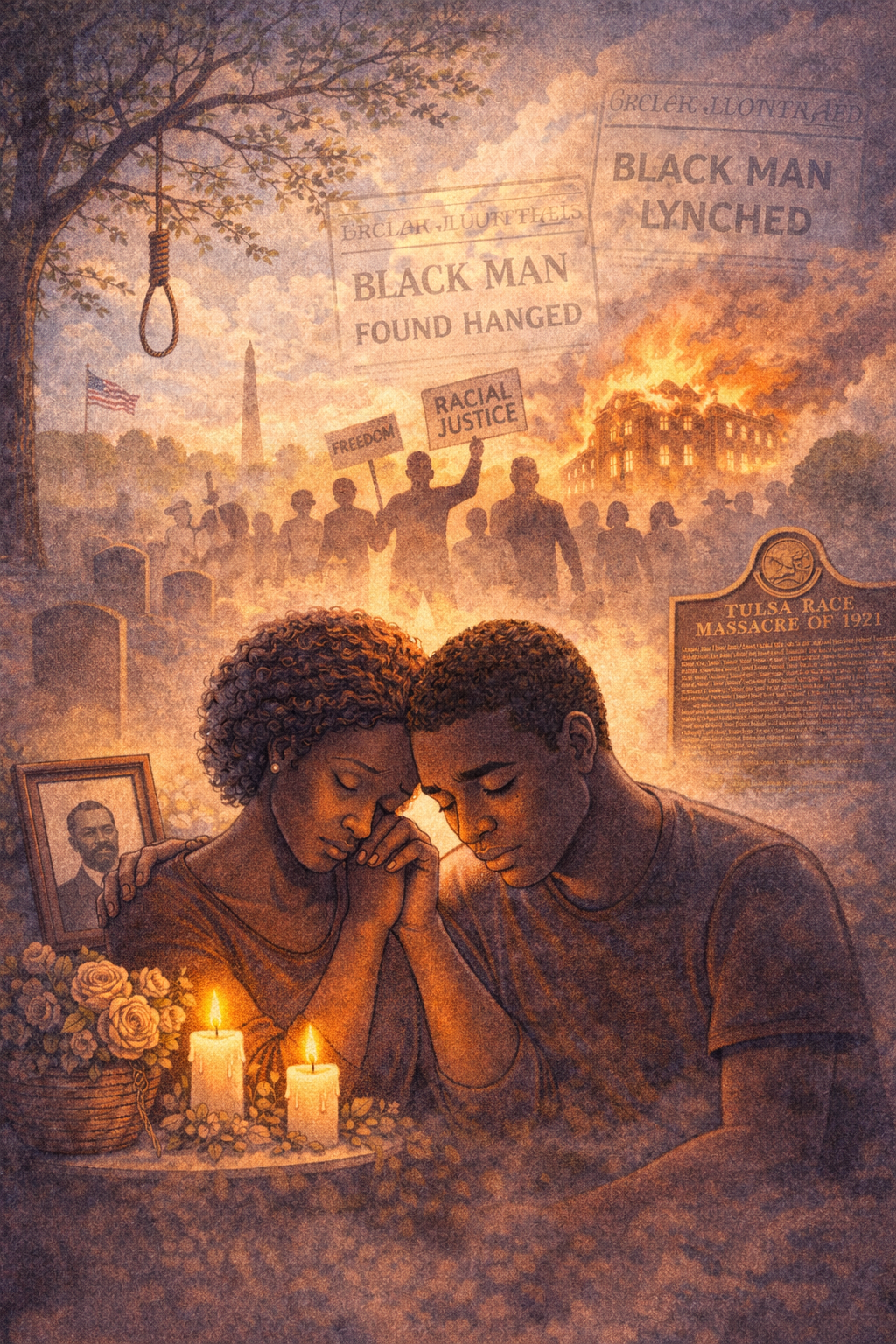
When we talk about racial violence in America, we are not just recounting isolated events — we are tracing a continuum of pain, loss, and psychological harm that spans centuries and still shapes people’s lives today.
The haunting images of lynch mobs, brutal massacres, and racially motivated terror that marked the U.S. landscape from the era after Reconstruction through the 20th century are well documented by historians and civil-rights advocates. Lynching — mob executions outside the justice system — was used as an instrument of White supremacy to terrorize Black communities long after emancipation. These acts were not random; they were intended to enforce social hierarchy and control, and they were often communal events marked by mutilation, celebration, and public spectacle.
Racial violence was widespread during the so-called “Red Summer” of 1919, when clashes erupting in cities from Chicago to Washington, D.C., left dozens dead and thousands displaced. In Atlanta in 1906, unproven accusations led to days of mob violence against Black residents, with scores killed and injured. These chapters are part of a larger chronicle stretching back to early colonial conflicts and continuing through the civil-rights era and into modern incidents of community unrest.
Racial Violence Isn’t Just Physical — the Trauma Lingers
Academic research shows that the effects of racial violence extend far beyond the moment of harm. The psychological toll mirrors many of the symptoms associated with post-traumatic stress — chronic anxiety, hypervigilance, emotional dysregulation, and disrupted development — and is often passed down across generations.
Physical violence and the threat of violence communicate more than hurt to the body: they communicate vulnerability, instability, and exclusion. These signals become embedded in the psyche of individuals who experience or witness that violence, and they ripple out into families and communities. Years of research link prolonged exposure to racial trauma with a greater risk for mental-health challenges, physiological stress responses, and even long-term health disparities.
Why the Past Still Matters Today
This history isn’t distant. The framing of suspicious deaths as “suicides” in communities with high racial violence raises deep mistrust — particularly when families and community members see patterns that echo older forms of violence used to intimidate and marginalize. Critics point out that the way investigations are handled can leave families questioning whether justice was served, especially when the broader context of racial terror is ignored.
Modern hate-crime data from the FBI show the highest number of race-motivated incidents on record, with anti-Black crimes consistently the most frequently reported. This suggests that while the forms of violence may change over time, the structural conditions that allow racial fear and hatred to surface persist.
Beyond individual incidents, racial trauma affects communities’ sense of safety and trust in institutions. Historical violence — from city rioting to brutal massacres — contributes to community mistrust of law enforcement and the justice system, which in turn inhibits help-seeking and healing.
Towards Healing: Recognition and Resilience
Acknowledging the history of racial violence and the ways it continues to shape lived experience — is a first step toward collective healing. Trauma isn’t just personal; it’s cultural and intergenerational. Research advocates for community-responsive approaches that validate experiences of racial trauma and provide culturally informed support.
Recognizing that racial violence leaves both visible and invisible wounds helps us better understand not just individual pain, but patterns of mistrust, withdrawal, and community fragmentation. Healing requires more than remembrance — it requires investment in safe spaces, mental-health access, structural reform, and listening with empathy to those whose lives have been shaped by violence and its aftermath.