
Supporting Firefighters Through Trauma, Hope and Healing
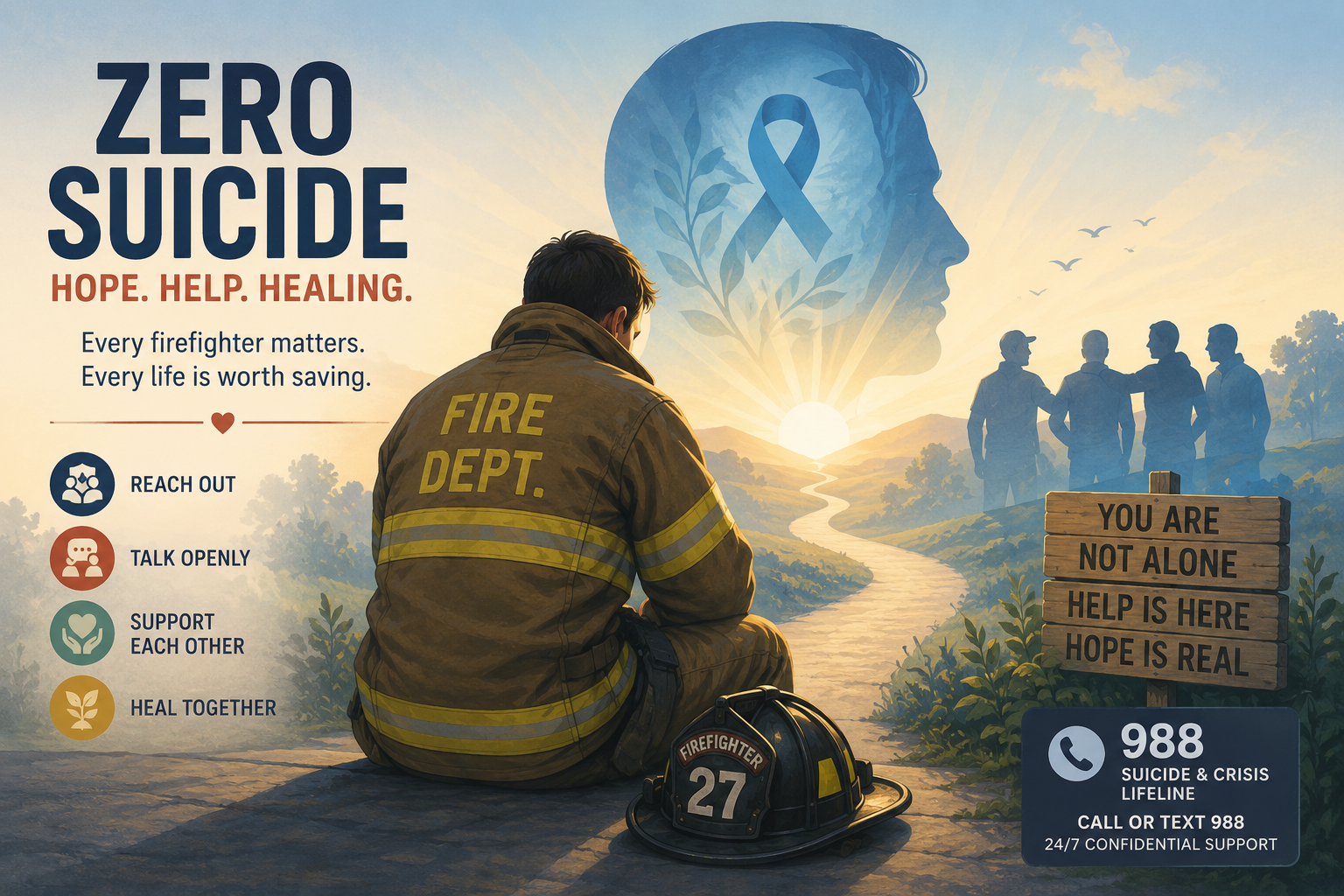
Every day, firefighters and emergency responders run toward danger while the rest of us run away. They witness tragedy, loss, injury, death, and human suffering on a regular basis. While they are trained to manage emergencies, no one is immune to the emotional toll that repeated exposure to trauma can take.
June is PTSD Awareness Month, an opportunity to recognize the mental health challenges faced by firefighters, EMS personnel, law enforcement officers, and other first responders. Studies suggest that firefighters experience rates of post-traumatic stress disorder (PTSD) significantly higher than the general population, with some estimates indicating that as many as one in five firefighters may meet the criteria for PTSD during their careers.
For organizations committed to the Zero Suicide framework, these realities underscore an important truth: suicide prevention is not only about crisis intervention. It is also about recognizing trauma, reducing stigma, creating supportive cultures, and ensuring that people receive help before they reach a point of despair.
The Hidden Injuries of Service
Firefighters often experience repeated exposure to traumatic events throughout their careers. A single catastrophic incident can leave lasting emotional scars, but the cumulative impact of hundreds of difficult calls may be equally damaging. Trauma can manifest as anxiety, depression, sleep disturbances, substance misuse, hypervigilance, emotional withdrawal, or PTSD.
Unfortunately, the culture of toughness that helps first responders perform under pressure can also create barriers to seeking help. Many firefighters worry that admitting they are struggling may be perceived as weakness or could affect their careers. As a result, symptoms often go untreated for months or years.
Why This Matters for Suicide Prevention
Research and experience have shown that unresolved trauma can increase the risk of suicidal thoughts and behaviors. First responders face unique occupational stressors that can compound over time, making early intervention critical. Mental health challenges are not personal failures; they are often predictable responses to extraordinary circumstances.
The Zero Suicide approach reminds us that every interaction matters. Supervisors, peers, family members, healthcare providers, and community organizations all play a role in recognizing warning signs and connecting individuals with support.
Recovery Is Possible
There is hope. PTSD is treatable, and recovery is possible.
Evidence-based treatments, including trauma-focused therapies such as EMDR and cognitive therapies, have helped many first responders process traumatic experiences and regain a sense of control and well-being. Peer support programs, employee assistance programs, culturally competent counseling, and specialized treatment programs for first responders can all be effective pathways to healing.
Increasingly, fire departments and public safety organizations are also embracing wellness programs that normalize conversations about mental health, encourage peer support, and connect personnel with professional resources before a crisis develops.
What Communities Can Do
Supporting firefighters and first responders requires more than appreciation ceremonies and thank-you messages. Communities can:
Normalize conversations about mental health.
Encourage help-seeking without judgment.
Support peer support and wellness programs.
Ensure access to trauma-informed care.
Recognize that emotional injuries deserve the same attention as physical injuries.
Learn the warning signs of suicide and how to respond.
A Message of Hope
The Zero Suicide movement is built on a simple but powerful belief: every suicide is preventable, and every life has value.
For firefighters and first responders living with trauma, the message is equally clear: you do not have to carry these burdens alone. Healing is possible. Support is available. Reaching out is a sign of strength, not weakness.
This PTSD Awareness Month, let us honor the people who protect our communities by ensuring they receive the care, compassion, and support they deserve. The strongest firefighters know that asking for help is not giving up—it is taking the first step toward recovery.
If you or someone you know is struggling with thoughts of suicide, call or text 988 to reach the Suicide & Crisis Lifeline, available 24 hours a day, seven days a week.