
When the Climate Turns Harsh: Why Unstable Times Increase Suicide Risk
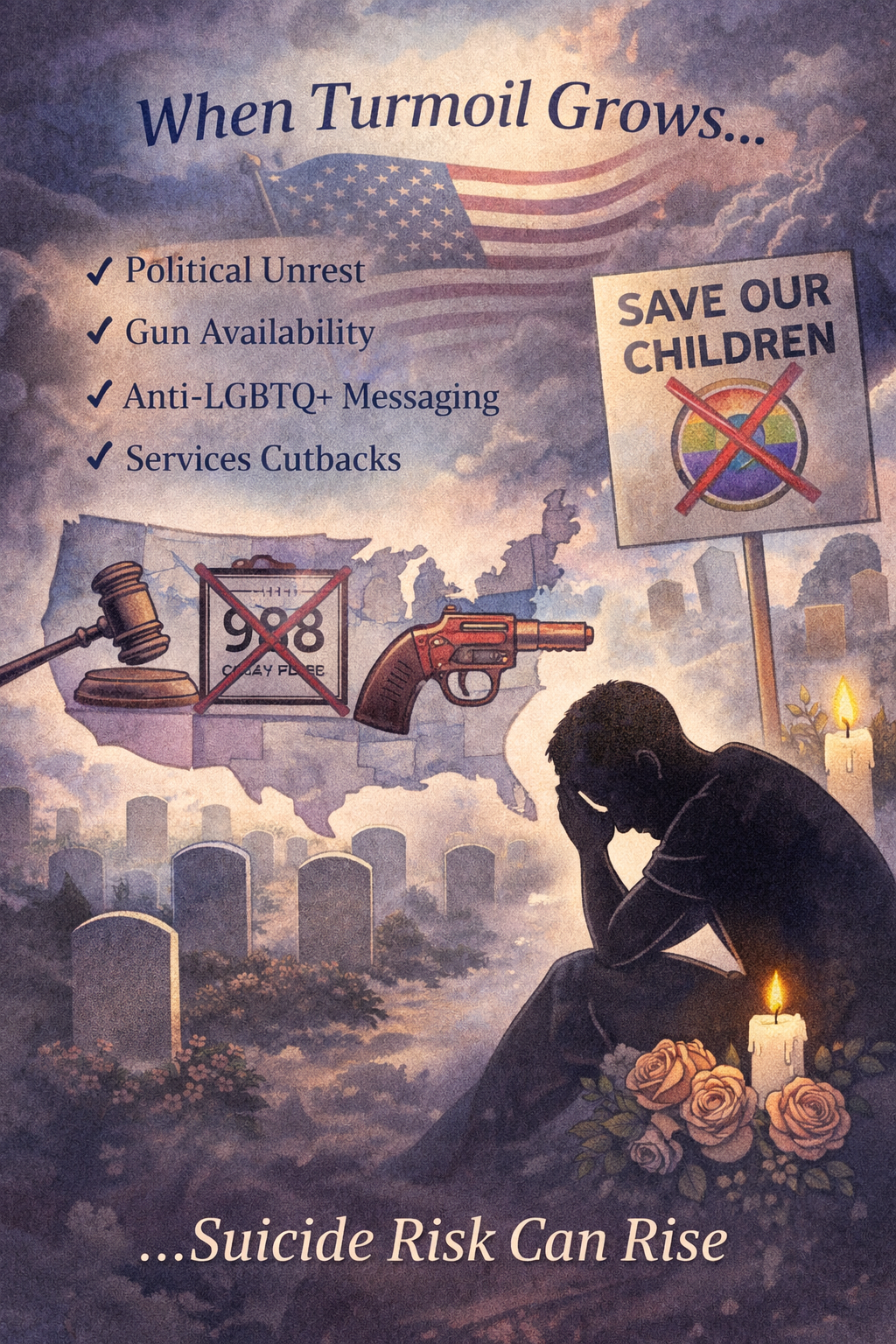
Suicide is complex. No single election, speech, or policy “causes” it. But social climates matter. Periods marked by political unrest, rising violence, gun culture, and hostile messaging toward marginalized groups can increase stress, isolation, and fear—especially for young people and communities already facing stigma.
After the 2024 election, The Trevor Project reported a sharp surge in crisis contacts from LGBTQ+ youth, alongside survey findings that many young people felt their well-being was negatively affected by the political climate. In times of social instability, spikes in distress signals—such as crisis-line contacts—can be an early warning that community support systems are under strain.
At the same time, shifts in how mental-health services are structured and funded have raised concerns among providers about access and continuity of care. Regardless of political perspective, the public-health principle is simple: when demand for mental-health support rises, maintaining clear, trusted, and well-resourced points of entry is essential.
We also cannot ignore broader cultural context. Firearm availability, for instance, amplifies risk. As national data show, firearms account for the largest share of suicide deaths in the U.S.—and states with higher rates of gun ownership typically have higher suicide rates. That’s a pattern rooted in lethality, not ideology.
In 2025, executions increased in several states even as the death penalty continues its long-term decline nationwide. According to recent analysis, while executions spiked, the overall use of capital punishment remains historically low and continues to lose ground across much of the country. Moments when state-sanctioned death rises can contribute to a broader atmosphere in which violence feels normalized rather than exceptional. Cultural tone, after all, matters.
A Closer Look at Suicide in America
Recent national statistics paint a sobering picture:
Suicide is among the top 10 leading causes of death in the U.S. across multiple age groups.
Rates vary by region, gender, and demographic group, but the scale of loss affects families and communities everywhere.
Many people who die by suicide have no previous attempt on record, underscoring the need for broad, accessible supports and early intervention.
These patterns remind us that suicide is widespread, crosses socioeconomic lines, and often happens in the context of intersecting stressors—not as an isolated event.
Why “Unstable Times” Increase Risk
Heightened threat and fear messaging amplify anxiety and depressive symptoms.
Targeted rhetoric toward marginalized groups intensifies minority stress and isolation, which are known risk factors.
Institutional uncertainty around social supports erodes trust and inhibits help-seeking.
Easy access to lethal means increases the likelihood that a crisis becomes fatal.
None of this is partisan. It is public health.
What Protects Communities
Stable, well-funded crisis services, including culturally competent supports.
Visible, trusted points of contact—like 988—prominently communicated in workplaces, schools, and community networks.
Lethal-means safety, including safe firearm storage and temporary off-site storage during crises.
Community norms that affirm dignity and belonging rather than isolation or dehumanization.
Engaged employers and schools, because economic and social stability are protective factors.
Suicide prevention isn’t about ideology. It’s about reducing risk, strengthening connection, and ensuring people have somewhere to turn—especially when the world around them feels volatile.
If you or someone you know is in immediate danger, seek emergency help. In the U.S., you can call or text 988 to reach the Suicide & Crisis Lifeline.